
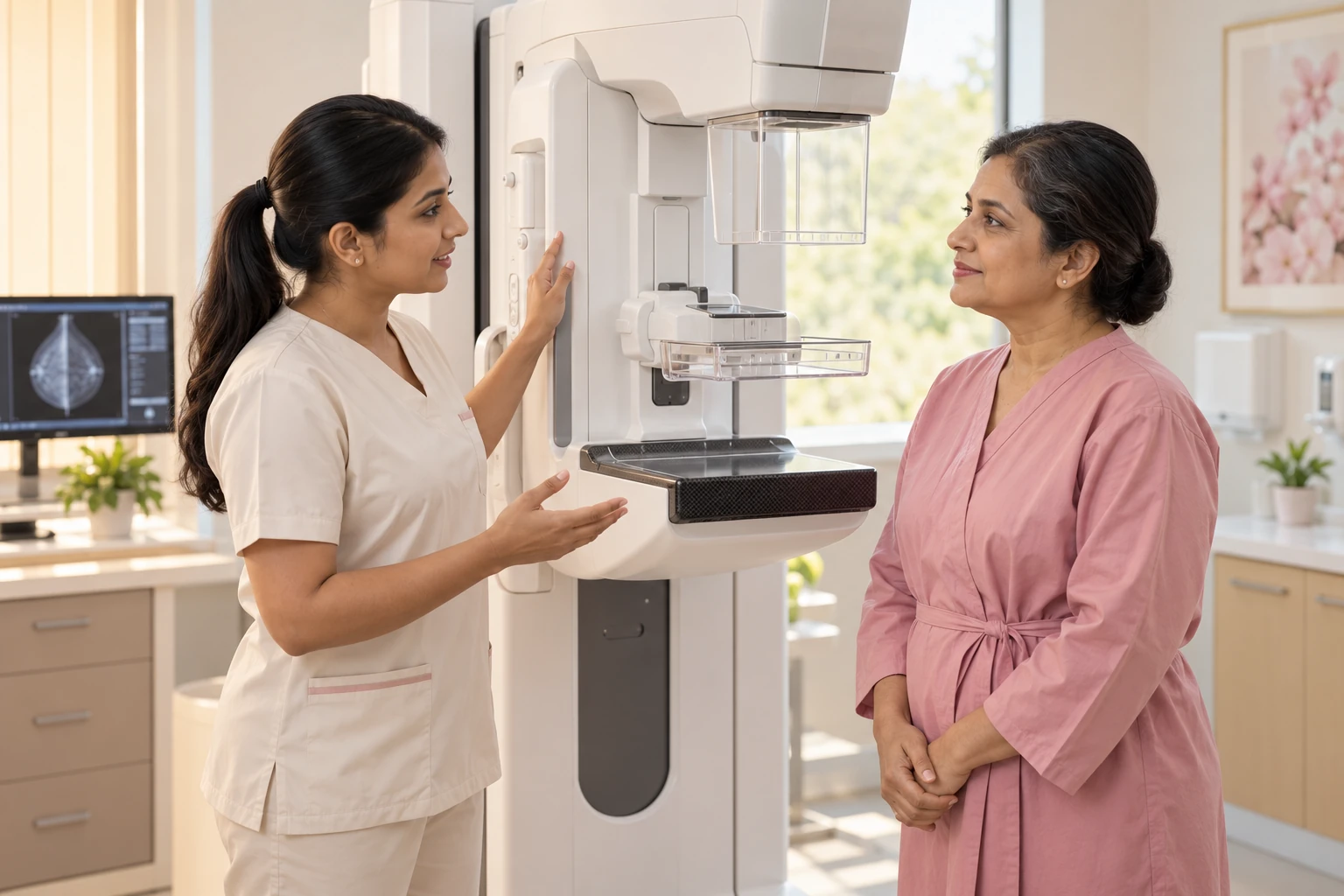
Know Your Risk. Understand Your Screening Options.
You do not need to wait for a breast concern to learn about your health. Understanding your risk and discussing appropriate screening can help you make informed decisions about your care.
At Breast Watch, we explain what screening involves, which factors can influence breast cancer risk, and when to seek medical advice.
What Is Breast Cancer Screening?
Breast cancer screening means checking for cancer before symptoms develop. It can help identify some cancers at an earlier stage, when treatment may be more effective.
Screening and symptom assessment serve different purposes. If you have already noticed a lump, nipple discharge, skin changes, or another unusual symptom, you need a medical assessment rather than waiting for routine screening.
Why Screening Matters
Screening mammography can reduce the risk of dying from breast cancer. However, no screening test can detect every cancer or guarantee a particular outcome. The aim is to choose an appropriate screening plan based on your age, health history, and individual risk.
Understanding the Different Breast Tests
Mammography
A mammogram uses low-dose X-rays to create images of the breast. It can reveal changes that are too small to feel.
A screening mammogram is performed when there are no symptoms. A diagnostic mammogram investigates a symptom or an abnormal finding and may involve additional views.
Clinical Breast Examination
During a clinical breast examination, a trained healthcare professional checks the breasts and underarms for lumps or other changes.
Clinical breast examination forms part of India’s public screening approach. An abnormal finding requires further assessment, which may include imaging and, where appropriate, a biopsy. A normal examination does not mean that future changes can be ignored.
Breast Ultrasound
Ultrasound uses sound waves to examine breast tissue. It may help assess a lump or clarify a finding from another test. It is generally an additional investigation rather than a replacement for routine mammography.
Breast MRI
MRI uses magnetic fields and radio waves to produce detailed images. It may be recommended alongside mammography for people at high risk. It is not routinely needed for everyone.
When Should You Start Breast Screening?
There is no single screening schedule that suits every person. Recommendations vary between healthcare programmes and professional guidelines.
In India
In India, the national operational framework includes clinical breast examination every five years for women aged 30 to 65 within its population screening programme. This is a public health programme schedule, not a universal mammogram schedule or a reason to delay assessment of symptoms.
International Guidelines
Some international guidelines begin routine mammography at age 40 for women at average risk. For example, the US Preventive Services Task Force recommends mammography every two years from ages 40 to 74. Your doctor should help you decide which approach is appropriate for your circumstances.
Higher Risk
People with a strong family history, certain inherited gene changes, or previous chest radiotherapy may need earlier or more frequent screening.

What Can Increase Breast Cancer Risk?
A risk factor increases the likelihood of developing breast cancer. It does not mean that you will definitely develop it. Equally, having no known major risk factors does not remove the possibility.
Factors your doctor may consider include:
Increasing ageBreast cancer risk generally rises as you get older.
Family historyBreast cancer in close relatives can influence your risk.
Inherited gene changesCertain harmful changes, including those in BRCA1, BRCA2, and PALB2, can increase risk.
Previous breast conditionsA history of breast cancer, DCIS, or certain abnormal breast tissue changes may affect future risk.
Previous chest radiotherapyTreatment involving the chest at a young age can increase risk.
Hormonal and reproductive historyMenstrual history, age at childbirth, and some hormone treatments can influence risk.
Lifestyle factorsAlcohol, physical inactivity, and excess body weight, particularly after menopause, can contribute.
A risk assessment considers these factors together. It provides an estimate to guide care, not a prediction of what will happen to you.
What Does It Mean to Have Dense Breasts?
Breast density describes the balance of glandular, fibrous, and fatty tissue seen on a mammogram. It cannot be judged reliably by breast size, firmness, or touch.
Dense breasts are common and are not a disease. However, they matter for two reasons:
Dense tissue can make some cancers harder to see on a mammogram.
Higher breast density is associated with an increased risk of breast cancer.
If your report mentions dense breasts, ask your doctor what this means alongside your other risk factors. Additional ultrasound or MRI is not automatically necessary for everyone with dense breasts. The benefits and possible disadvantages of extra imaging should be discussed individually.

Family History and Genetic Counselling
If cancer runs in your family, a discussion about inherited risk may help clarify whether you need additional assessment.
Tell your doctor about cancers on both sides of your family, including the type of cancer and the age at diagnosis where known.
Genetic counselling may be appropriate if there is:
- A known inherited harmful gene change in the family.
- Breast cancer diagnosed at age 50 or younger.
- A history of ovarian cancer or male breast cancer.
- A relevant history of pancreatic or certain prostate cancers.
Genetic testing is not necessary for everyone. A genetic counsellor or appropriately trained clinician can explain whether testing is useful, what the results could mean, and how they may affect your care or your relatives.
For people with a confirmed high-risk inherited change, care may include earlier screening and MRI alongside mammography.

Can You Reduce Your Risk?
Some risk factors cannot be changed, but certain everyday choices can help lower risk:
Stay activeMake regular physical activity part of your routine.
Healthy weightWork towards a healthy weight that is appropriate for you.
AlcoholLimit or avoid alcohol.
BreastfeedingBreastfeed if possible and appropriate for your circumstances.
These choices reduce risk but cannot guarantee prevention. Developing breast cancer is never a personal failure.
For selected people at higher risk, a specialist may discuss risk-reducing medicines or surgery. These options are not suitable for everyone and require careful consideration of their benefits, side effects, and personal impact.
Understanding the Benefits and Limitations of Screening
An informed screening decision includes understanding possible disadvantages:
False-positive results
A finding may require further tests even though it is not cancer.
False-negative results
A test may miss a cancer that is present.
Overdiagnosis
Screening may detect a cancer that would never have caused harm, potentially leading to unnecessary treatment.
Radiation exposure
Mammography involves a small dose of radiation.
Being called back after screening does not automatically mean you have cancer. It means the finding needs clarification.
Preparing for a Mammogram
Bring previous breast images and reports if available so the radiologist can compare them with your new results.
On the day of your mammogram, avoid deodorant, powder, lotion, or perfume on the breasts and underarms. During the examination, each breast is briefly compressed between plates to obtain clear images. This may feel uncomfortable, so tell the radiographer if you are finding it difficult.
Before leaving, ask when your results will be available and how you will receive them.
Stay Aware Between Screening Appointments
Knowing how your breasts usually look and feel can help you recognise a change. Seek medical advice about a new lump, unusual nipple discharge, dimpling, swelling, or a nipple that has newly turned inward.
Do not wait for your next screening appointment to report symptoms, even if your last result was normal. Checking your own breasts does not replace recommended screening.
Understand Your Risk and Plan Your Next Step
Unsure when to begin screening, concerned about your family history, or need help understanding a breast report? A consultation can help you discuss your concerns and identify an appropriate next step.
Message on WhatsApp to enquire about an appointment.
Depending on your symptoms and history, an in-person examination or further tests may be needed.